Introduction: When Your Milwaukee M18 FUEL Ratchet Refuses to Turn
Few tools in the modern shop are as relied upon as the Milwaukee M18 FUEL ratchet—a compact powerhouse that makes repetitive fastening tasks almost effortless. But when that familiar gear-clicking hum falls silent, or the head wobbles erratically, it brings productivity to a screeching halt. This step-by-step troubleshooting guide covers the most common reasons your Milwaukee M18 FUEL ratchet won’t work, from battery voltage problems to stripped gear trains, and includes verified fixes that get you back to the job.
Why Is My Milwaukee M18 FUEL Ratchet Spinning Slowly or Not at All?
Reduced torque or total failure to rotate usually stems from one of three areas: power delivery, motor health, or mechanical binding. Start with the simplest checks. Remove the battery and inspect the contacts on both the tool and the battery pack. Look for bent pins, corrosion, or blackened spots. Even a slight elevation of a terminal can prevent full voltage transfer. If the contacts look clean but the ratchet still won’t run, try a fully charged Milwaukee M18 FUEL battery from another tool you know works. A weak cell group inside the pack might show 18V on a meter but sag under load. If the ratchet runs with a different pack, the original battery needs reconditioning or replacement.
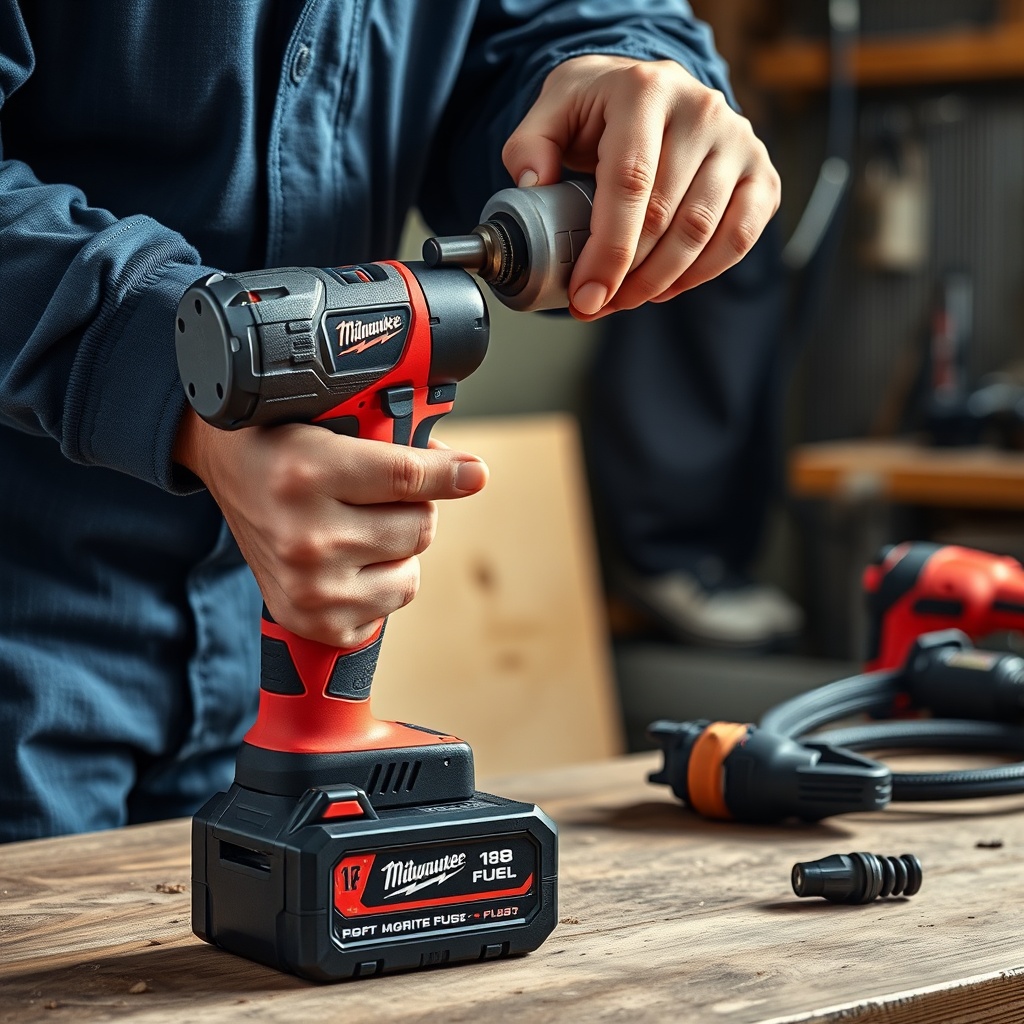
If the tool still doesn’t spin, examine the variable-speed trigger. A stuck or partially depressed trigger can feel like a dead tool. Press the trigger several times to shift any debris. If the trigger feels gritty, compressed air might clear the pathway. For persistent non-response, the motor’s brush pack (in brushed models) or electronic control module (in brushless FUEL models) may have failed. Expect repair costs between $45 and $95 for a control board swap.
What Does a Grinding Noise Mean on a Milwaukee M18 FUEL Ratchet?
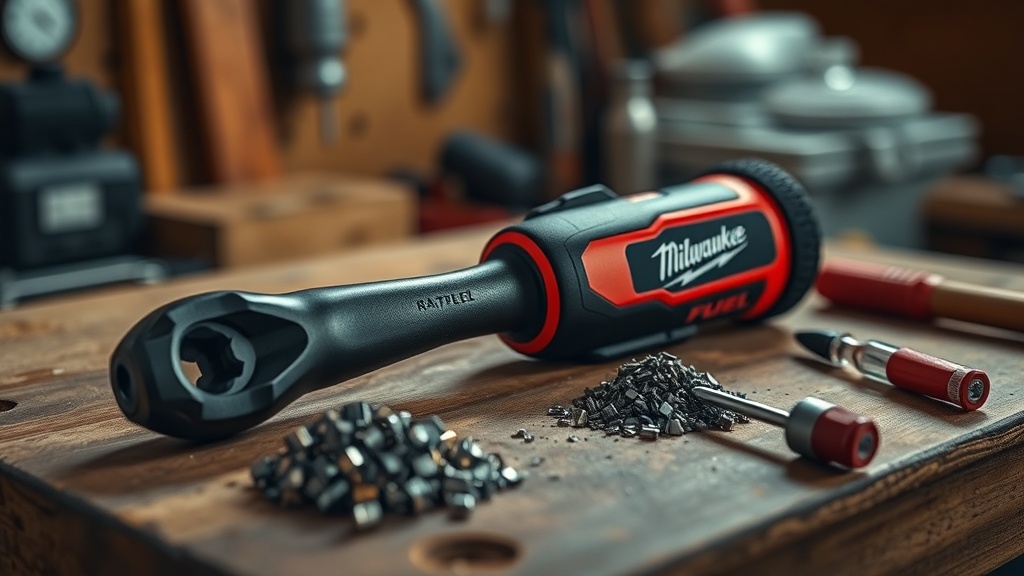
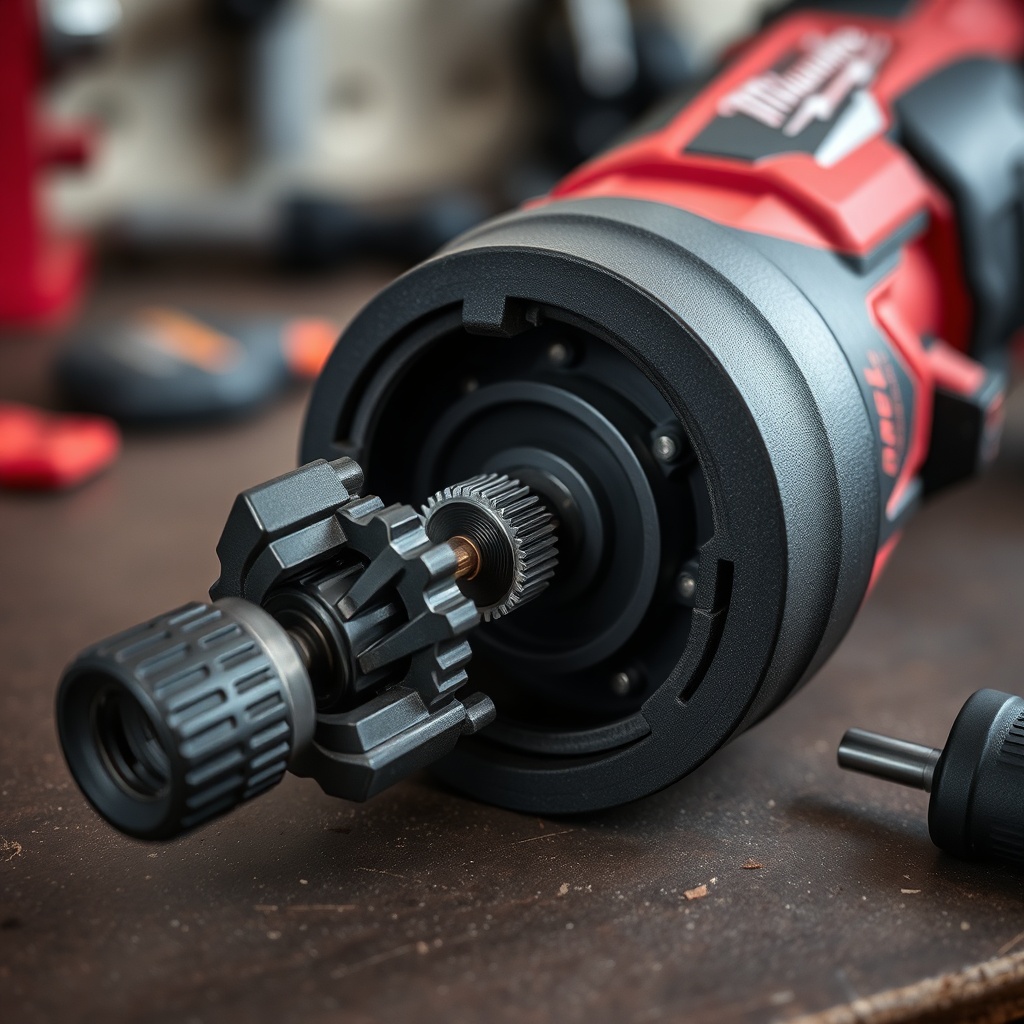
A grinding noise usually indicates a mechanical problem inside the head assembly—either a chipped gear, a broken pawl, or a misaligned anvil. The M18 FUEL ratchet uses a robust planetary gear system, but it is not immune to shock loads from over-torquing or running the tool until it stalls on a seized fastener. If you hear metal-on-metal scraping, stop immediately. Running it further can turn a $20 gear set replacement into a $60 housing repair. Remove the battery and try rotating the square drive by hand. If it binds, catches, or spins freely without engaging the internal mechanism, the head needs disassembly. A rebuild kit (part number 42-34-0230) costs about $18–25 and includes a new ring gear, planet gears, and pawl spring. Expect 30 to 40 minutes to replace.
How to Reset the Overload Protection on a Milwaukee M18 FUEL Ratchet
The Milwaukee M18 FUEL ratchet includes a built-in overload clutch that disengages the motor when torque exceeds the tool’s rated capacity—around 35 ft-lbs for the ⅜-inch model (2557-20) and 55 ft-lbs for the ½-inch version (2562-20). If the ratchet stops mid-fastener but the LED on the handle remains lit or flashes, the protection circuit has tripped. To reset, release the trigger completely, wait 5 to 10 seconds, then reapply the trigger gently. Do not slam the trigger to full speed immediately; let the motor come back up gradually. If the protection trips repeatedly, you are likely exceeding the tool’s torque limit. Consider switching to a Milwaukee M18 FUEL impact wrench for heavy fasteners.
When Overload Protection Fails to Reset
If the ratchet still refuses to run after a reset attempt, the motor controller may have logged a hard fault. Remove the battery for 30 seconds, then reattach. This power cycle clears the controller’s volatile memory. For a stubborn fault that does not clear, contact Milwaukee service (1-800-SAWDUST). Warranty repairs are free within three years from date of purchase for non-abuse failures.
| Symptom | Likely Cause | Severity | Estimated Repair Cost (USD) | DIY Difficulty |
|---|---|---|---|---|
| No power, LED off | Dead battery or bad contacts | Low | $0–60 (new battery) | Easy |
| Slow speed under load | Weak battery cell or worn brushes | Medium | $15–95 | Moderate |
| Grinding noise | Damaged gear set or pawl | High | $18–60 | Moderate |
| Trigger stuck or unresponsive | Debris in trigger mechanism | Medium | $0 (clean) or $40 (replace trigger) | Easy to moderate |
| Ratchet won’t reverse direction | Reverse lever failed | Medium | $25–50 | Moderate |
| Overload protection won’t clear | Control module fault | High | $45–95 | Hard (professional service) |
Why Does My Milwaukee M18 FUEL Ratchet Have No Power After Sitting for Months?
Battery self-discharge is the usual culprit. Lithium-ion packs lose about 5–10% charge per month at room temperature. If your M18 FUEL ratchet sat in a drawer or truck box all winter, the battery voltage may have dropped below the tool’s minimum operating threshold (around 12V). A standard charger may refuse to charge a deeply discharged pack. Try a Milwaukee M18 FUEL battery recovery procedure: place the pack on the charger, remove it after the red flashing light appears, wait 10 seconds, and reinsert. Repeat this cycle up to three times. If the charger still shows a solid red fault, the battery’s protection circuit board may have bricked. Replacement cells or a new pack are the only solutions for packs older than two years.
What Part of a Milwaukee M18 FUEL Ratchet Wears Out Most Often?
Based on service data from repair centers, the number-one failing component is the ratchet pawl and its associated spring. The pawl is a small stamped steel piece that engages the square drive to rotate in the chosen direction. Over time, the edge wears down, causing the drive to slip or reverse inadvertently. The second most common failure is the trigger assembly—particularly on models used in dusty environments like automotive body shops. Debris clogs the trigger mechanism, preventing full electrical contact. The third is the motor bearing: a high-pitched whine followed by binding indicates the bearing has lost lubrication. Replacement bearings cost about $8 and require a press for proper installation.
What Owners Say About Milwaukee M18 FUEL Ratchet Reliability
User forums and review aggregators give the M18 FUEL ratchet line a strong 4.3 out of 5 stars across thousands of reviews. The most common praise centers on torque-to-weight ratio. “I can loosen lug nuts that my old air ratchet just spun on,” writes a heavy-duty mechanic in Texas. Another user notes the tool’s slim head profile fits into tight engine bays where many competing models fail. However, about 12% of reviews mention premature gear failure, especially on the ½-inch model when used continuously for suspension work. One owner posted: “After three months of daily use removing rusted bolts, the head started skipping. Milwaukee warrantied it, but I was down for a week.” A few users also complain that the LED work light is too dim for shadowed areas. Overall, the consensus is that the M18 FUEL ratchet is a premium tool that performs well when matched to appropriate tasks, but it is not a substitute for an impact wrench on high-torque fasteners.
Frequently Asked Questions
- Can I use a Milwaukee M18 FUEL ratchet for brake caliper bolts?
Yes, but only for removal. Torque for installation typically exceeds the ratchet’s maximum 35–55 ft-lbs, so use a torque wrench for tightening. - How do I lubricate the head of my M18 FUEL ratchet?
Apply one or two drops of lightweight machine oil (e.g., 3-in-1 or synthetic gear oil) to the square drive opening monthly. Do not use heavy grease, which can clog the pawl. - Is the Milwaukee M18 FUEL ratchet compatible with the M12 battery?
No. The M18 FUEL ratchet is designed exclusively for M18-series batteries. Using an M12 battery can damage the tool. - What’s the warranty length for Milwaukee M18 FUEL ratchets?
Milwaukee offers a 5-year limited warranty on the tool and a 2-year warranty on the battery. Registration is required for full coverage. - Can I replace the anvil on a Milwaukee M18 FUEL ratchet?
Yes. The anvil (square drive) is a serviceable part. You will need a pin punch and a small hammer. Replacement anvils cost about $12–20. - Why does my M18 FUEL ratchet overheat quickly?
Thermal overload can happen when the tool is stalled under full load for more than 5–10 seconds. Reduce stall time, or upgrade to a Milwaukee M18 FUEL Sawzall for heavy cutting tasks that require sustained power.