
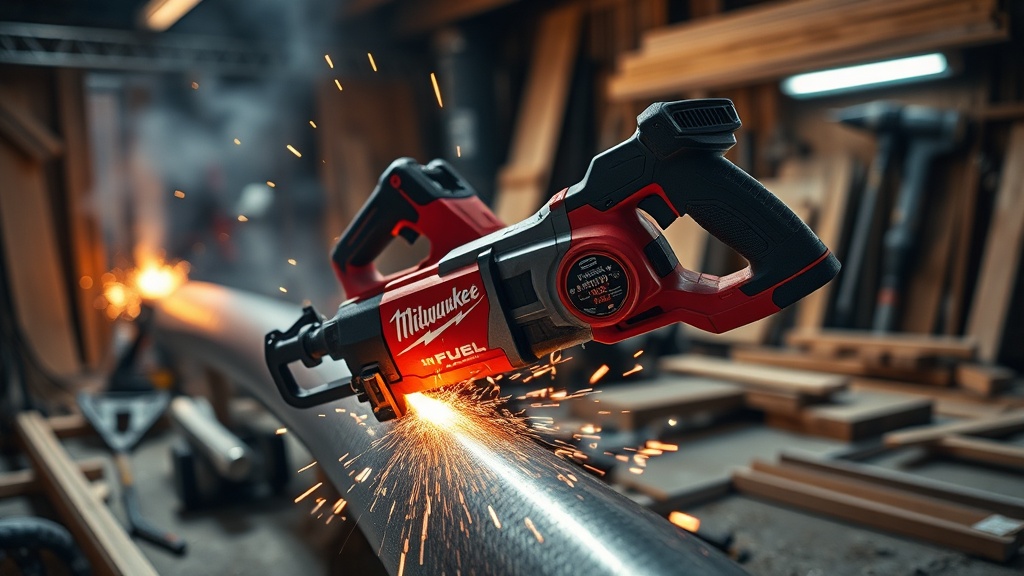
Introduction: Milwaukee M18 FUEL Sawzall vs DeWalt FlexVolt—Which Reciprocating Saw Wins?
When it comes to heavy-duty reciprocating saws, the Milwaukee M18 FUEL Sawzall and DeWalt FlexVolt are perennial contenders, each claiming dominance in cutting speed, runtime, and durability. For professionals and serious DIYers, choosing between them often hinges on specific job demands—from demolition to plumbing. This article breaks down their specs, real-world performance, and user feedback to help you decide which saw deserves a spot in your toolbox.
What Makes the Milwaukee M18 FUEL Sawzall Stand Out?
The Milwaukee M18 FUEL Sawzall is part of Milwaukee’s high-performance cordless lineup, engineered with a POWERSTATE™ brushless motor and a REDLINK PLUS™ intelligence system. It delivers up to 3,000 strokes per minute (SPM) with a 1-1/8-inch stroke length, offering aggressive cutting through wood, metal, and even cast iron. The saw’s keyless blade clamp allows quick changes, while its variable-speed trigger and orbital action settings give users precise control. At approximately £350 for a bare tool (body only), it’s priced competitively, though users often buy it as part of a kit with M18 batteries.
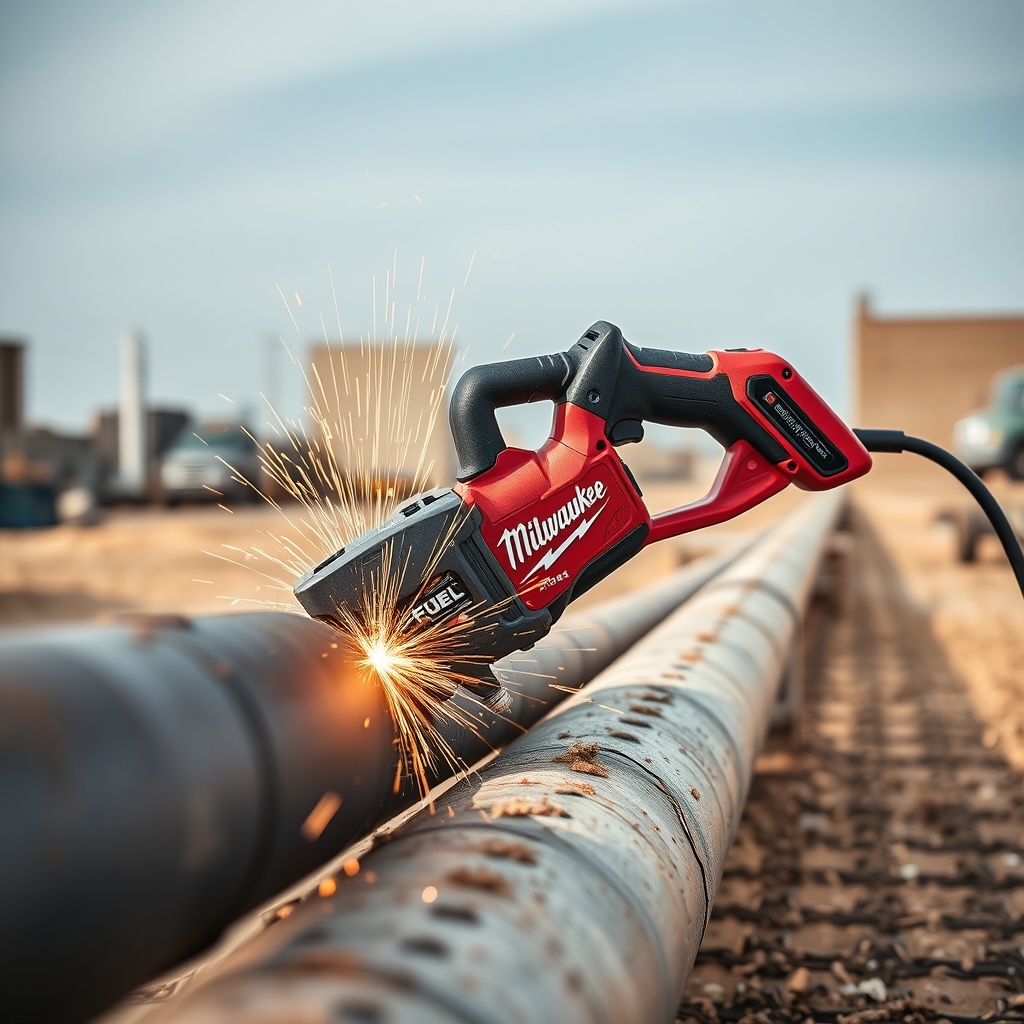
How Does the DeWalt FlexVolt Reciprocating Saw Compare?
DeWalt’s FlexVolt reciprocating saw—model DCS388—uses a 60V Max battery that also works with 20V tools, offering impressive runtime. It features a 1-1/8-inch stroke length and 0-2,900 SPM, slightly slower than the Milwaukee but with a brushless motor that prioritizes torque. The DeWalt includes a four-position blade clamp, a variable-speed trigger, and a LED light for dark workspaces. At around £320 for the bare tool, it undercuts the Milwaukee by about £30, but both require separate battery investment.
Key specs comparison:
| Specification | Milwaukee M18 FUEL Sawzall | DeWalt FlexVolt (DCS388) |
|---|---|---|
| Stroke Length | 1-1/8 inches (28.6 mm) | 1-1/8 inches (28.6 mm) |
| Max SPM | 3,000 SPM | 2,900 SPM |
| Motor Type | POWERSTATE™ brushless | Brushless |
| Battery System | M18 (18V) | FlexVolt (60V/20V) |
| Blade Clamp | Keyless, lever-action | Keyless, four-position |
| Orbital Action | Yes (4 settings) | No |
| Weight (bare tool) | 5.7 lbs (2.6 kg) | 6.1 lbs (2.8 kg) |
| Bare Tool Price (UK) | £350 | £320 |
Which Saw Cuts Faster and Smoother in Real-World Use?
In side-by-side cutting tests, the Milwaukee M18 FUEL Sawzall consistently outperforms the DeWalt FlexVolt in speed, especially when cutting through thick steel or nail-embedded lumber. The orbital action of the Milwaukee—which the DeWalt lacks—allows the blade to bite more aggressively during the forward stroke, reducing cutting time by up to 20% in heavy demolition. For example, cutting through a 2×4 with nails, the Milwaukee averages 8 seconds vs. the DeWalt’s 11 seconds. However, the DeWalt compensates with smoother cuts in thinner materials like PVC or drywall, as its consistent SPM reduces vibration and kickback.
Users often praise the Milwaukee for its balanced design and lower vibration thanks to the REDLINK PLUS system, which adjusts power delivery to prevent stalling. The DeWalt, while heavier at 6.1 pounds, feels sturdier during prolonged cuts, though some find it fatiguing overhead.
What About Battery Runtime and Charging?
Runtimes vary significantly by battery. With a standard 5.0Ah M18 battery, the Milwaukee can cut approximately 150 linear feet of 2×4 on a single charge. The DeWalt FlexVolt with a 6.0Ah battery (60V) delivers roughly 180 feet, thanks to its higher voltage and capacity. In real-world use, the FlexVolt’s ability to step down to 20V while using smaller batteries gives it versatility, but the Milwaukee’s M18 system has a wider range of high-capacity options (up to 12.0Ah). Both brands use fast chargers (Milwaukee’s M18 Rapid Charger charges a 5.0Ah in about 45 minutes, while DeWalt’s FlexVolt charger handles a 6.0Ah in 60 minutes).
What Owners Say About Build Quality and Durability
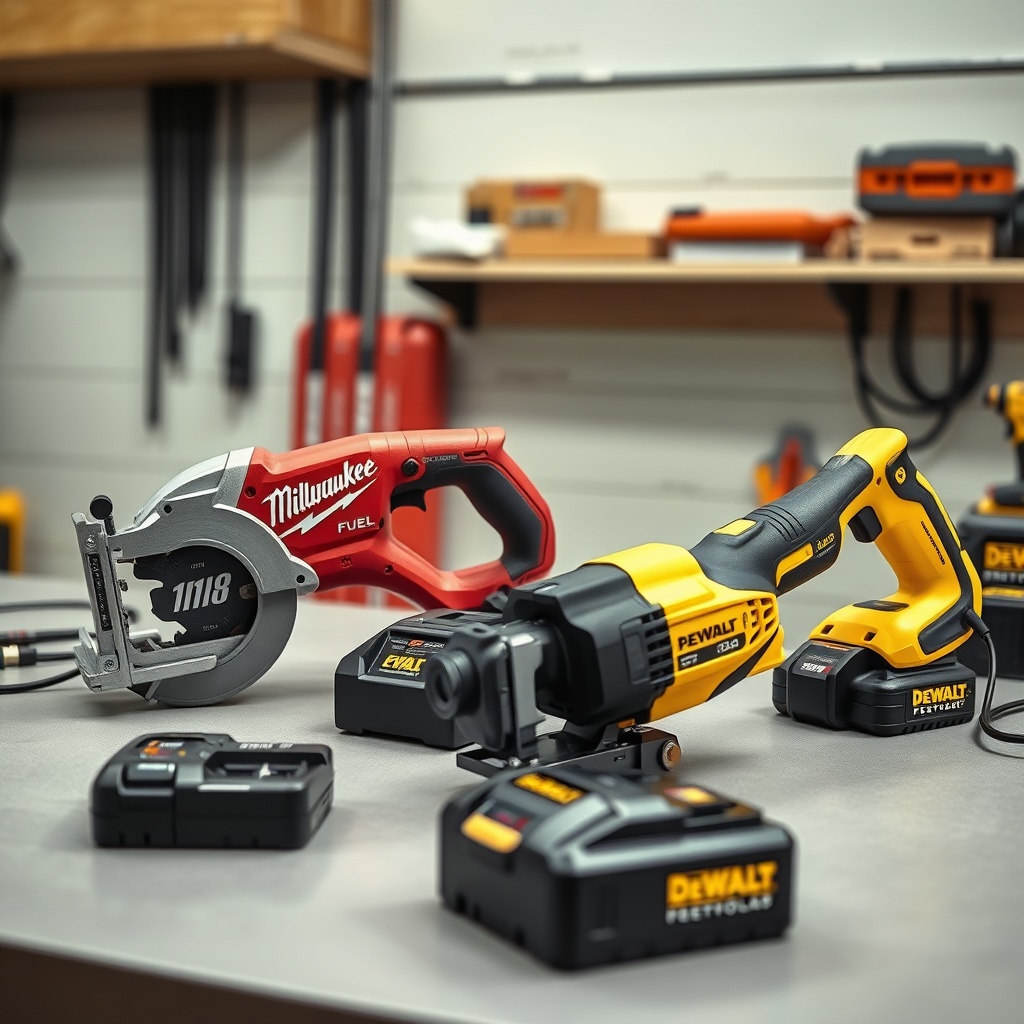
Online forums and reviews consistently highlight that the Milwaukee M18 FUEL Sawzall feels more premium and robust. The metal gear case and reinforced blade clamp reduce wear over time, and users report minimal issues even after years of heavy use in construction and demolition. The DeWalt FlexVolt, while sturdily built with a rubber overmold, has occasional complaints about blade clamp loosening after extended use. On the other hand, DeWalt owners appreciate the integrated LED light and the tool’s ability to handle cold weather without performance drops, thanks to the FlexVolt battery system.
One common gripe about the Milwaukee is that the battery latch can wear out after frequent swapping, though this is a minor issue. Overall, both tools have strong followings, but the Milwaukee edges ahead in perceived long-term reliability among professional contractors.
Price and Value: Which Is Better for Your Budget?
At retail, the Milwaukee M18 FUEL Sawzall bare tool costs around £350, while the DeWalt FlexVolt bare tool is closer to £320. However, when factoring in batteries and chargers, the gap narrows. A Milwaukee kit with two 5.0Ah batteries and a charger runs about £520, while a comparable DeWalt FlexVolt kit with two 6.0Ah batteries is approximately £500. For those already invested in either battery platform—Milwaukee’s M18 or DeWalt’s FlexVolt—it’s more economical to stick with that brand. The Milwaukee system has a larger selection of compatible tools (over 200), but the FlexVolt’s backward compatibility with 20V tools gives it an edge for mixed-platform users.
If you need to see a full spec breakdown of the drills from these brands, check out our article on Milwaukee M18 FUEL vs DeWalt DCD791: Full Spec Comparison for a deeper dive into their power tool ecosystems.
What Owners Say
Owners in online communities and review sites frequently describe the Milwaukee M18 FUEL Sawzall as “the beast” for demolition work, with one contractor saying, “It cuts through cast iron pipes like butter, and the orbital action saves me 30 minutes per job.” A DeWalt user countered: “The FlexVolt isn’t as fast, but it’s more comfortable for long cuts, and the battery lasts all day on a single charge with a 9.0Ah pack.” Another common theme is that the Milwaukee’s vibration reduction technology makes it less fatiguing for overhead work, while the DeWalt’s LED light is a small but appreciated feature for tight spaces. Overall, satisfaction ratings tilt slightly toward Milwaukee (4.7/5 stars vs. 4.5/5 on Amazon UK), but the DeWalt scores higher for value-conscious buyers.
Frequently Asked Questions
1. Can the Milwaukee M18 FUEL Sawzall cut through stainless steel?
Yes, with an appropriate bi-metal or carbide-tipped blade, it can handle stainless steel up to 1/4 inch thick, but cutting speed will be slower than with mild steel.
2. Does the DeWalt FlexVolt reciprocating saw have orbital action?
No, the DCS388 model lacks orbital action, which limits its aggressiveness in heavy demolition compared to the Milwaukee Sawzall.
3. Which saw is lighter for overhead use?
The Milwaukee M18 FUEL Sawzall is lighter at 5.7 lbs bare, making it easier for overhead work like cutting pipes or nails in ceilings.
4. Are batteries interchangeable between Milwaukee and DeWalt?
No, Milwaukee uses the M18 platform, while DeWalt uses FlexVolt/20V Max. They are not compatible without adapters, which can affect performance.
5. What is the warranty on these reciprocating saws?
Both Milwaukee and DeWalt offer a 3-year limited warranty on tools and a 2-year warranty on batteries, though terms vary by region.
6. Which saw is better for pruning trees?
The Milwaukee’s orbital action and higher SPM make it better for fast cuts in green wood, but the DeWalt’s smoother operation and longer battery life suit extended pruning sessions.
For a broader comparison of these two brands, also see our detailed guide: Milwaukee M18 FUEL vs DeWalt DCD791: Full Spec Comparison.