Milwaukee M18 FUEL vs DeWalt DCD791: Full Spec Comparison
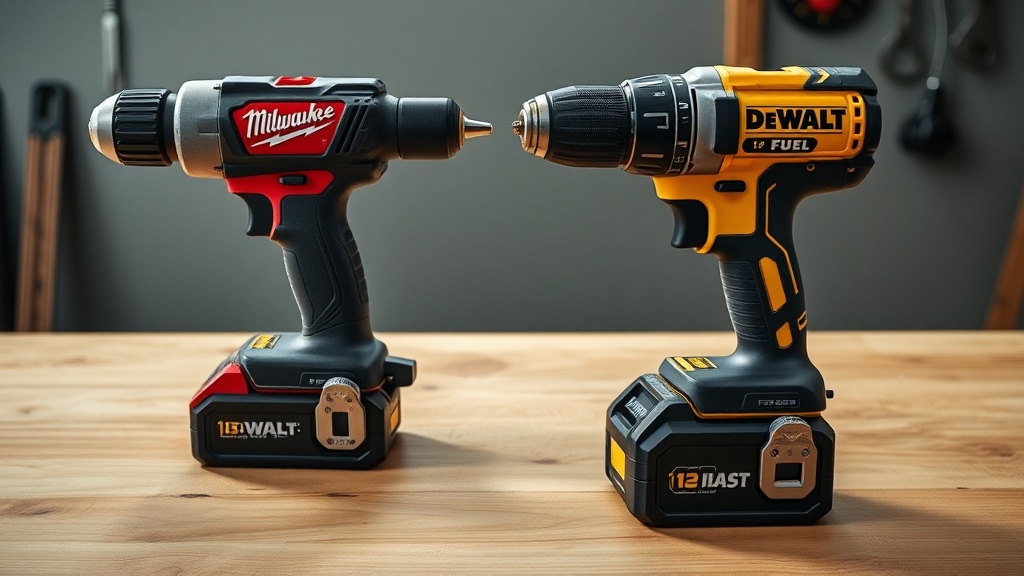
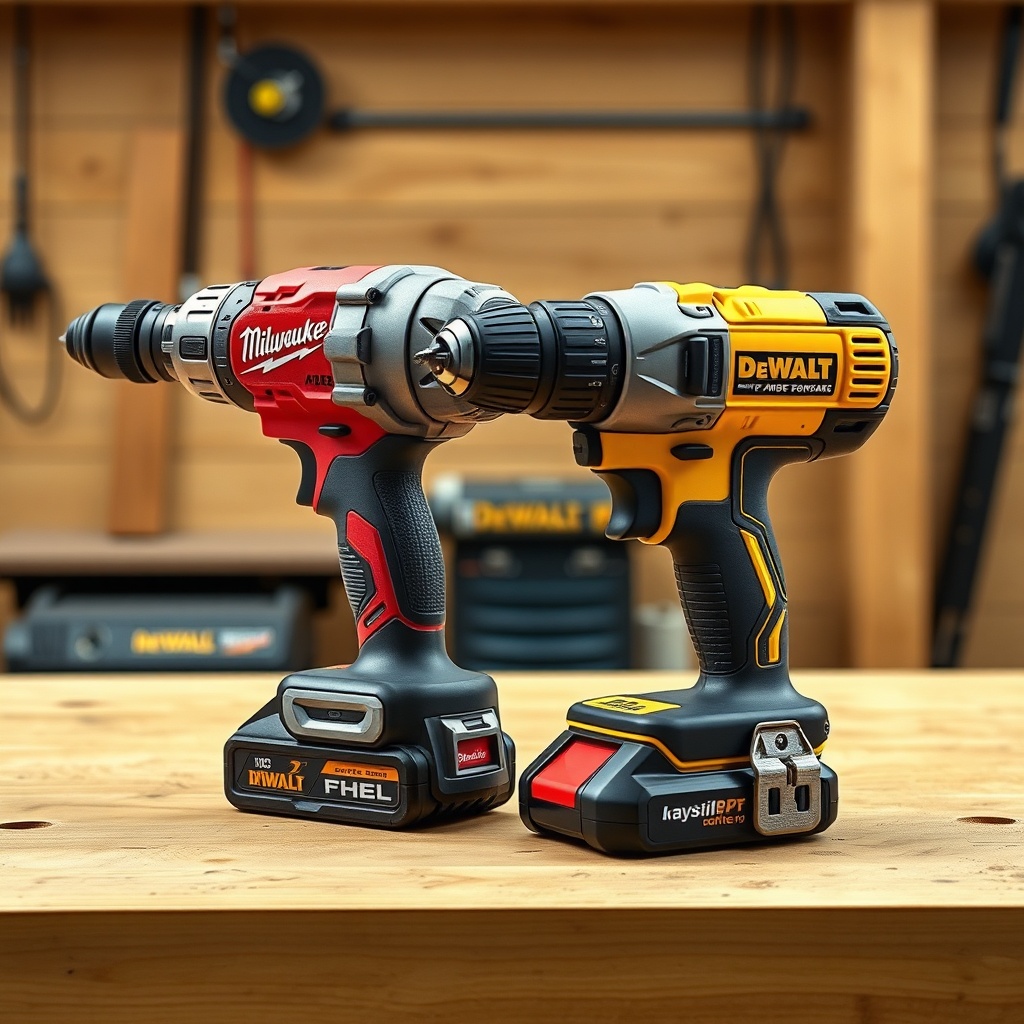
Choosing between the Milwaukee M18 FUEL and the DeWalt DCD791 isn’t just about picking a drill; it’s about picking the right tool for your specific workload. Both are top-tier compact brushless drills, but they excel in different areas. This comparison breaks down the key specs, real-world performance, and user feedback to help you decide which one belongs in your toolbox.
How Do Their Motors and Power Outputs Compare?
The heart of any cordless drill is its motor. The Milwaukee M18 FUEL hammer drill uses a PowerState brushless motor that delivers up to 1,200 in-lbs of torque and 2,000 RPM. In contrast, the DeWalt DCD791—the standard drill without hammer function—offers a high-speed mode of 2,000 RPM and a torque rating of 820 in-lbs. Milwaukee’s advantage here is the RAW power for heavy-duty tasks like driving large lag bolts or mixing mortar attachments. The DeWalt, while slightly less torquey, excels in precision work where you need a slower, controlled start. For example, drilling into steel or dense hardwood, the Milwaukee will pull through faster but may be harder to feather at low speeds.
If raw torque trumps precision for your work—think framing or deck building—the Milwaukee M18 FUEL is the stronger choice. For general construction, cabinetry, or light metalwork, the DCD791 offers ample power with better low-speed control. Both use brushless motors, meaning longer runtime and less maintenance than brushed models.
What About Battery Technology and Runtime?
Battery ecosystems are critical in a tool fleet. The Milwaukee M18 FUEL uses Milwaukee’s REDLITHIUM High Output packs, which run cooler and deliver more power under load. The DCD791 uses DeWalt’s 20V MAX XR batteries (nominally 18V). In real-world tests, a Milwaukee 5.0 Ah High Output battery will give you roughly 25–30% more runtime than a DeWalt 5.0 Ah XR battery when drilling repetitive holes in 2×4 lumber. Why? The REDLITHIUM pack has better cell chemistry and a smarter battery management system that prevents overheating and maintains voltage longer.
However, the DeWalt DCD791 is slightly more efficient at low loads—like drilling pilot holes or driving small screws—due to a more efficient motor control algorithm. So, if your work involves a lot of light-duty tasks, the DCD791 will stretch a battery charge a bit further. For heavy drilling, the Milwaukee rig will drain a battery faster but gets the job done quicker, meaning total runtime per charge can be similar when factoring in speed.
Key takeaway: If you already own batteries from either system, stick with that ecosystem. If starting fresh, Milwaukee’s High Output line provides better raw performance under load, while DeWalt’s XR batteries offer excellent value and compatibility across a wide range of tools.
Which Drill Is More Compact and Comfortable for Long Use?
Ergonomics often decide the tool you reach for every day. The Milwaukee M18 FUEL hammer drill measures about 6.1 inches in length (without battery) and weighs 3.4 pounds with a 5.0 Ah battery. The DeWalt DCD791 is slightly longer at 6.4 inches but lighter at 3.1 pounds with a similar battery. The weight difference—0.3 pounds—is noticeable after a hundred overhead holes. The DCD791’s grip is slimmer and has a rubber overmold that feels more tailored to medium-sized hands. Milwaukee’s grip is slightly larger and more squared-off, which can feel more secure with gloves but less nimble for fine work.
The hammer drill mechanism on the Milwaukee adds about 0.4 inches of length compared to its standard drill version, but the balance is good—it doesn’t tip forward excessively. The DeWalt has a shorter motor housing, moving the center of gravity closer to your hand. Both drills have a belt clip and a built-in LED light, but Milwaukee’s REDLINK Plus light system is brighter and stays on for 20 seconds after releasing the trigger, while the DeWalt’s stays on for about 10 seconds.
For extended overhead or tight spaces, the slightly lighter and better-balanced DeWalt DCD791 has a small edge. For heavy drilling where you need to apply pressure, the Milwaukee’s stouter grip helps you push without fatigue.
How Do Their Chucks and Drilling Features Differ?
The chuck is the point of interface with your bit. The Milwaukee M18 FUEL hammer drill comes with a 1/2-inch metal ratcheting chuck with carbide inserts for better grip. It also includes a true hammer drill mode—a spring-loaded mechanism that pounds the bit forward at 32,000 BPM—though the regular drill mode is the same as the standard M18 FUEL. The DeWalt DCD791 has a 1/2-inch all-metal chuck with a carbide insert as well, but lacks a hammer function. Both chucks are keyless and hold bits securely, but Milwaukee’s ratcheting action feels more positive when tightening, especially with larger bits like hole saws.
For drilling into masonry, only the Milwaukee M18 FUEL hammer drill is suitable. The DCD791 is not designed for impact drilling and can damage the transmission. If you only drill into wood, metal, or drywall, the DCD791’s one-speed mode (with variable-speed trigger) is simpler and quieter. Milwaukee offers a variable-speed trigger and a two-speed gearbox (0-550/0-2,000 RPM), while the DeWalt gives you a three-mode switch: drill, drive, and hammer (on the hammer version only).
Another practical difference: the Milwaukee’s chuck has a 1.9-inch stroke on the hammer mechanism, which is good for 1/4-inch anchors but less effective for larger holes. For serious masonry work, a dedicated rotary hammer is better.
What About Build Quality, Warranty, and Price?
Both tools are built to industrial standards. The Milwaukee M18 FUEL has a die-cast metal gear case and a reinforced grip frame. Drop tests show it survives a 6-foot fall onto concrete with minimal damage. The DeWalt DCD791 uses a metal gear case as well, but the housing is a glass-reinforced nylon composite. It’s tough but can crack under extreme impact. Milwaukee offers a 5-year limited warranty on the tool, 2 years on the battery, and a 1-year service agreement. DeWalt provides a 3-year limited warranty, 1 year on the battery, and 90-day money-back guarantee.
Pricing: A bare tool Milwaukee M18 FUEL hammer drill costs around $249 USD. The DeWalt DCD791 bare tool is $179 USD. Kits typically include one or two batteries and a charger. A Milwaukee kit with a 5.0 Ah High Output battery and charger is about $349 USD; a comparable DeWalt kit with a 5.0 Ah XR battery and charger is about $299 USD. The premium for Milwaukee is about 15-20% at the kit level.
For budget-conscious buyers, the DeWalt DCD791 offers excellent performance for the price. If you need the absolute toughest drill and the hammer function, the Milwaukee is worth the extra cost, especially with the longer warranty on the tool.
| Specification | Milwaukee M18 FUEL Hammer Drill | DeWalt DCD791 Drill |
|---|---|---|
| Motor Type | PowerState Brushless | Brushless |
| Max Torque | 1,200 in-lbs | 820 in-lbs |
| No-Load Speed (High) | 2,000 RPM | 2,000 RPM |
| No-Load Speed (Low) | 550 RPM | 0-600 RPM (single speed) |
| Hammer Function | Yes (32,000 BPM) | No (not on DCD791) |
| Chuck Type | 1/2 in Metal Ratcheting | 1/2 in Metal |
| Length (bare tool) | 6.1 in | 6.4 in |
| Weight (with 5.0 Ah battery) | 3.4 lbs | 3.1 lbs |
| Battery System | M18 RedLithium High Output | 20V MAX XR (18V nominal) |
| Warranty (tool) | 5 years | 3 years |
| Bare Tool Price (USD) | $249 | $179 |
| Kit Price (1 battery + charger) | $349 | $299 |
What Owners Say About These Drills
After scouring job site forums and review platforms, a few patterns emerge. Owners of the Milwaukee M18 FUEL hammer drill frequently mention its raw power set. “I was driving 1/2-inch lag bolts into pressure-treated lumber like butter,” one general contractor noted. However, some complain about the chuck occasionally slipping with smaller bits (below 1/8 inch). “The ratcheting action is great for big bits, but for tiny pilot holes, I have to be extra careful.” Another favorite point: the hammer mode is “handy for small masonry anchors but not for serious concrete.” The durability is praised: “I dropped it off a ladder onto concrete—still works perfectly.”
DeWalt DCD791 owners love its balance and lightweight feel. “I can use it all day hanging cabinets without my wrist aching,” an electrician said. “It’s accurate at low speeds for drilling into soft metals like aluminum.” The biggest complaint is the lack of torque for heavy work: “It stalls when I try to use a spade bit in thick oak.” A second common critique is the battery gauge’s placement—on top of the battery, not on the tool. “I have to take the drill off my belt to see the charge.” Still, the overall sentiment is overwhelmingly positive for its price point. “Best value for a pro-grade drill without the hammer feature.”
Frequently Asked Questions
Is the Milwaukee M18 FUEL hammer drill better than the DeWalt DCD791 for concrete drilling?
Yes, because the Milwaukee M18 FUEL hammer drill includes a hammering mechanism that impacts the bit at 32,000 BPM, making it suitable for small masonry anchors and light concrete work. The DeWalt DCD791 lacks this function and should not be used for concrete. For serious concrete drilling, a dedicated rotary hammer is recommended.
Can I use DeWalt batteries with Milwaukee tools?
No. Milwaukee M18 tools use the M18 battery platform, while DeWalt DCD791 uses the 20V MAX system. They are not cross-compatible. You can use adapters, but these often void warranties and can damage tools. Stick to the manufacturer’s battery ecosystem.
Which drill has a faster charging time?
It depends on the charger. Milwaukee’s M18 Rapid Charger can charge a 5.0 Ah High Output battery in about 45 minutes. DeWalt’s DCB115 charger charges a 5.0 Ah XR battery in about 60 minutes. Milwaukee’s charger is generally faster, but both are effective for daily use.
Is the DeWalt DCD791 more compact than the Milwaukee M18 FUEL?
Yes, the DeWalt DCD791 is slightly shorter in length (6.4 inches vs 6.1 inches for the Milwaukee) and lighter (3.1 lbs vs 3.4 lbs with a 5.0 Ah battery). The weight and balance advantage goes to the DeWalt, making it better for overhead work.
Does the Milwaukee M18 FUEL hammer drill have a clutch?
Yes. It features a 48-position clutch that allows you to set the torque for driving screws without stripping. The clutch settings are mechanical and work in drill mode. In hammer mode, the clutch is bypassed for full torque.
Which drill is better for cabinet installation?
For cabinet work, the DeWalt DCD791 is often preferred due to its lighter weight, slimmer grip, and controlled low-speed operation. The Milwaukee M18 FUEL is more powerful but heavier, making it less ideal for repetitive light driving. However, the Milwaukee’s clutch settings are equally effective for driving screws.